Postcard from Zurich
Postcard from Zurich
A cultural look through the Old Town and the city’s modern art legacy.
Zurich rewards travelers who look beyond its reputation as a financial capital. Along the Limmat River and Lake Zurich, the city reveals medieval lanes, richly decorated guild houses, Chagall’s stained-glass windows, and a modern art history shaped by Dadaism.
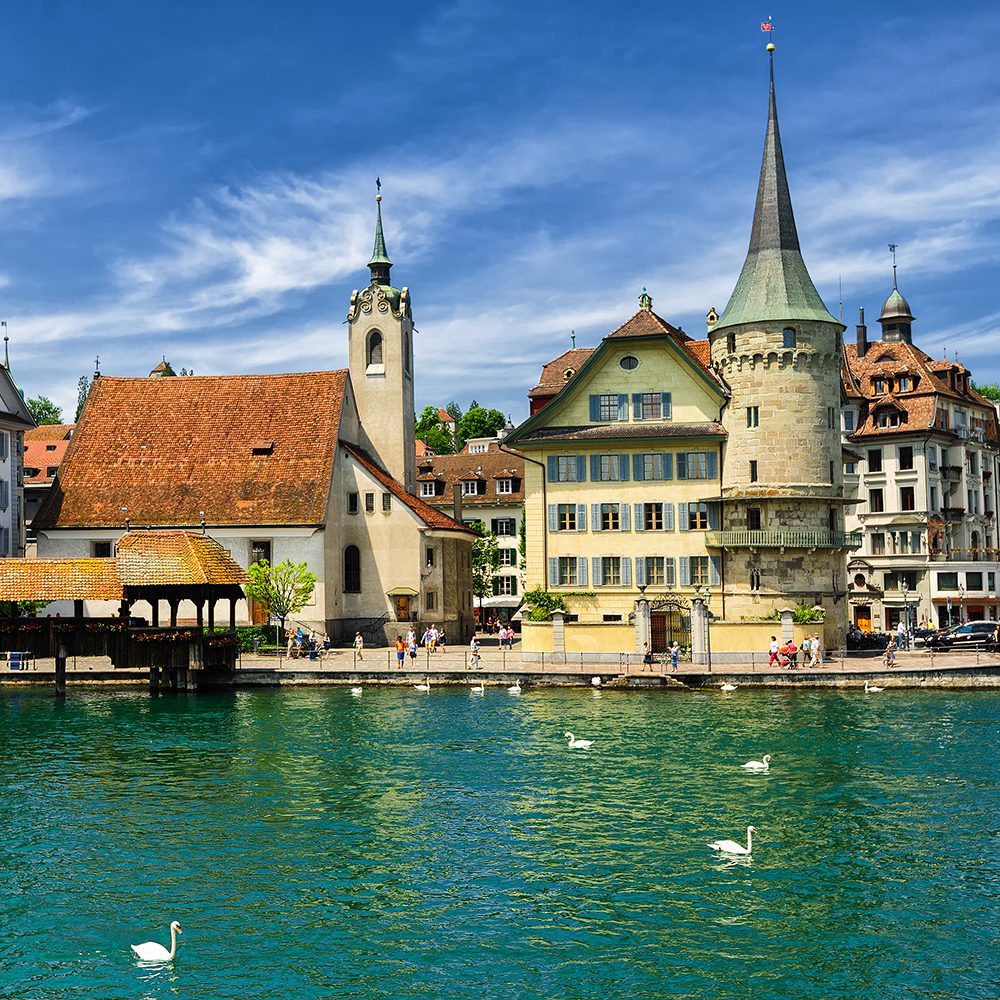
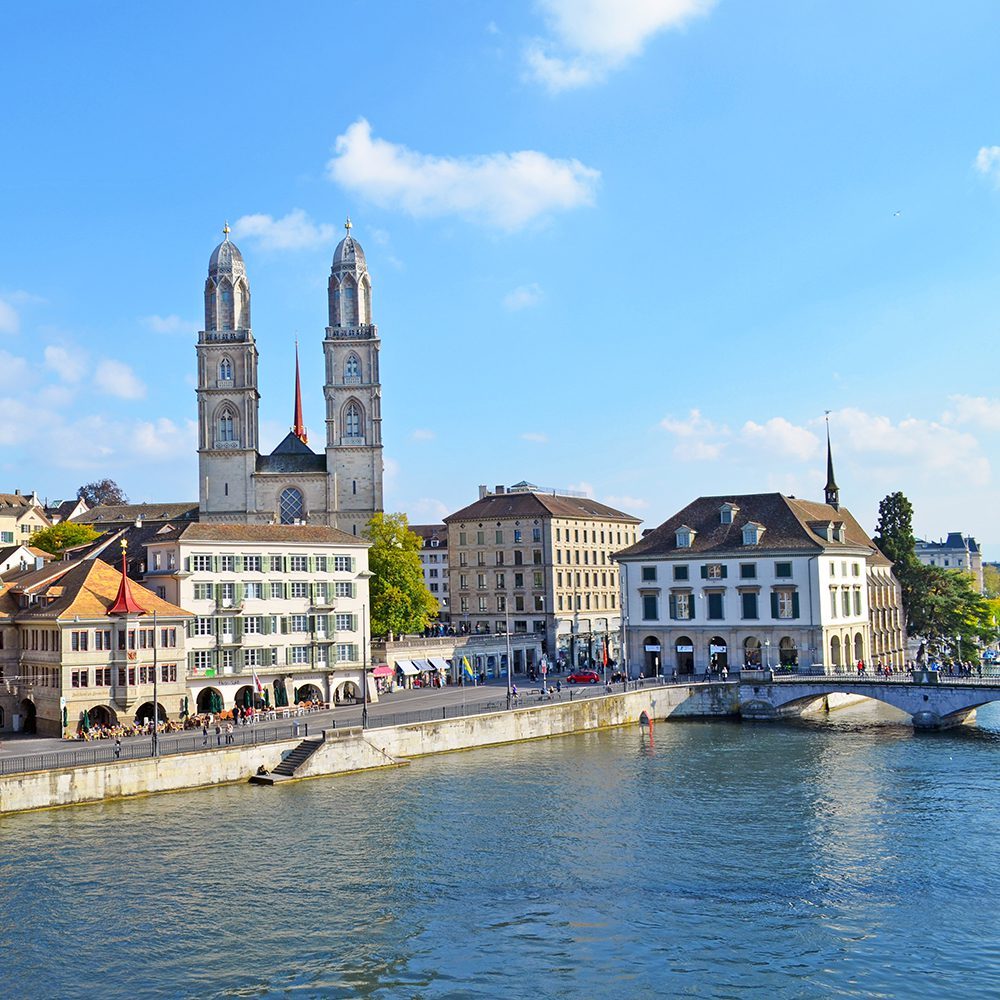
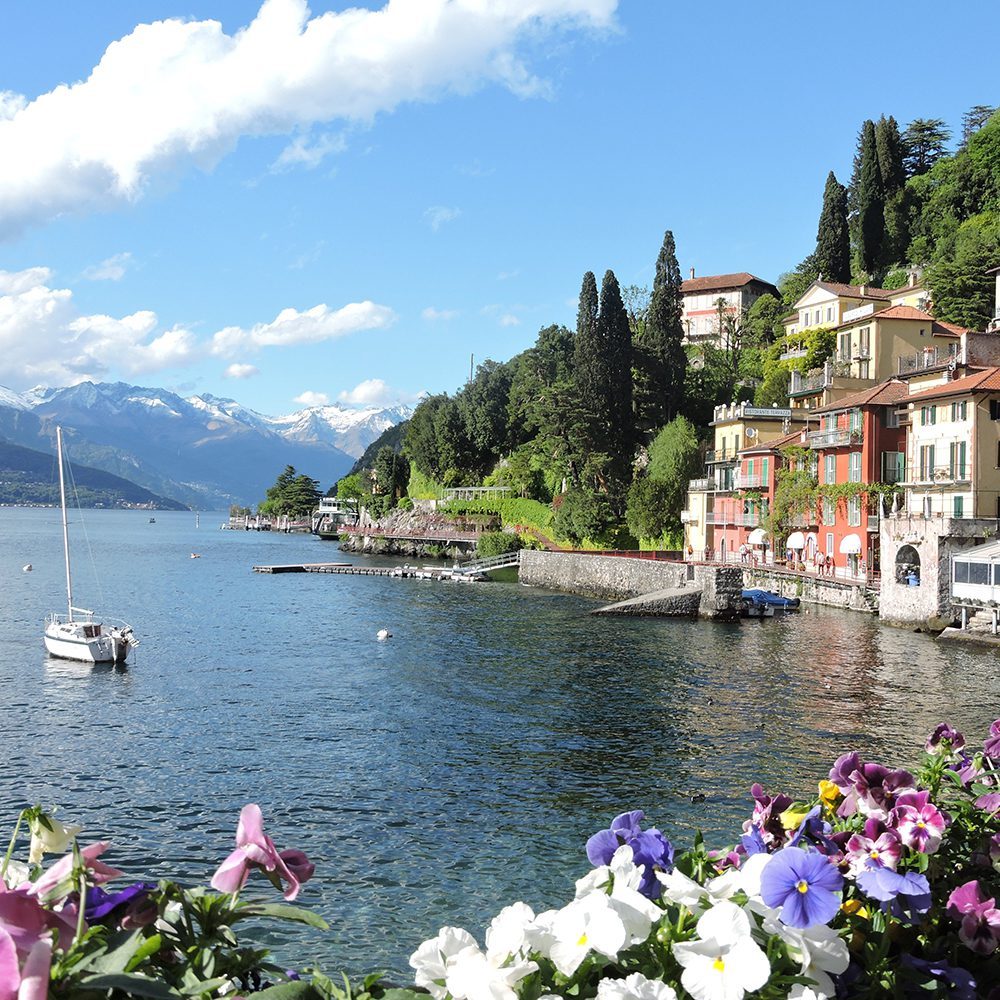
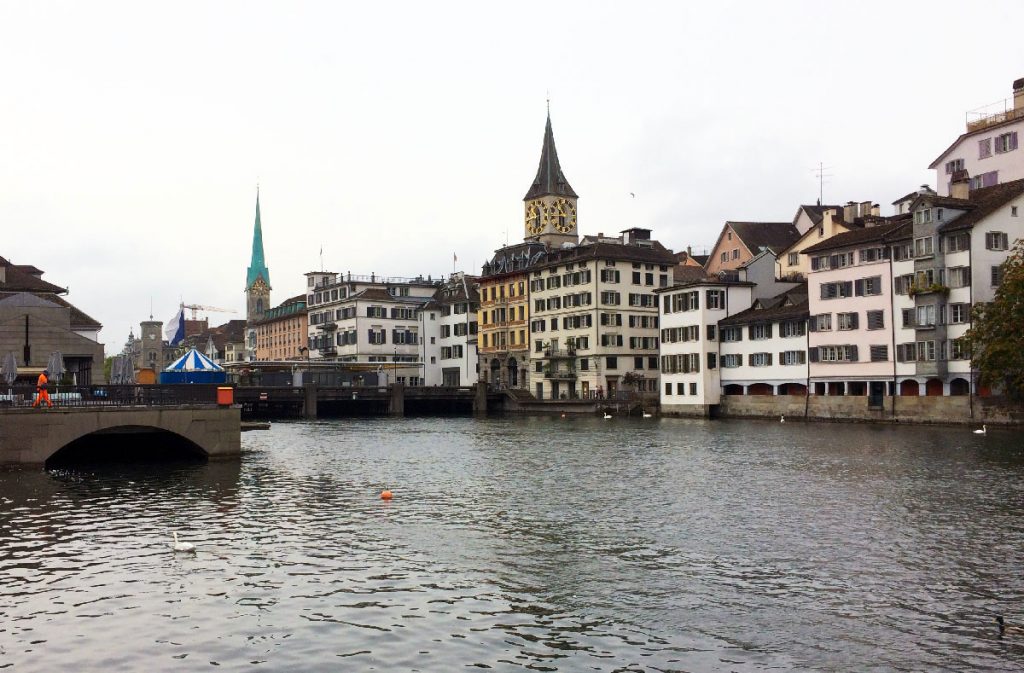
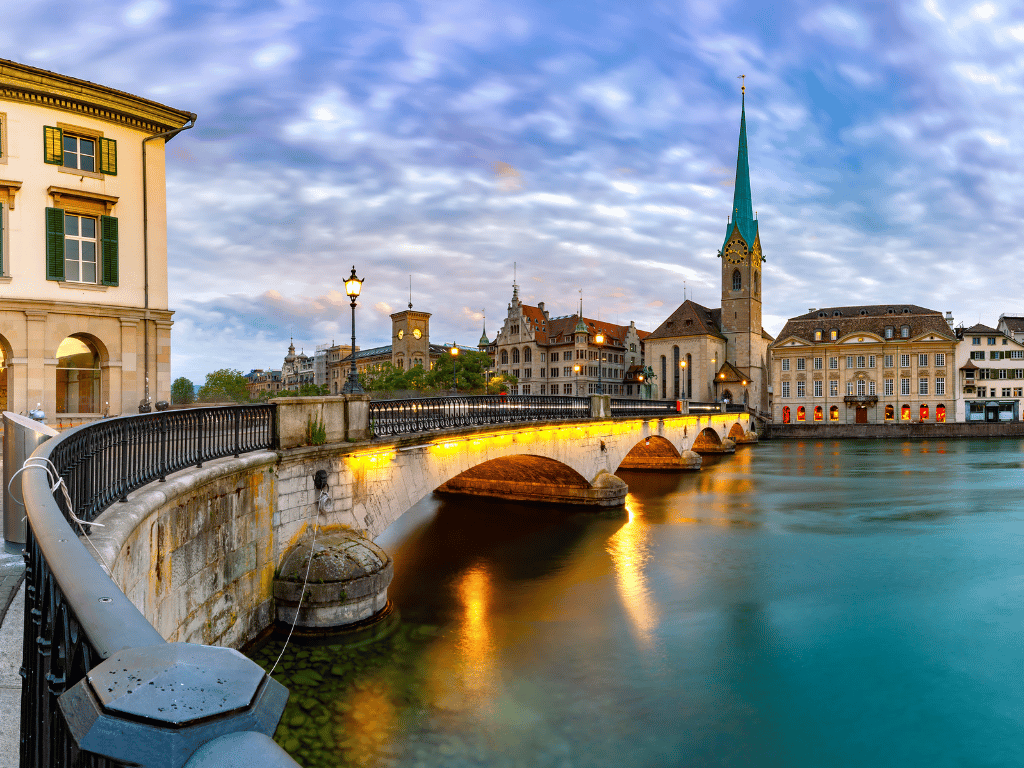
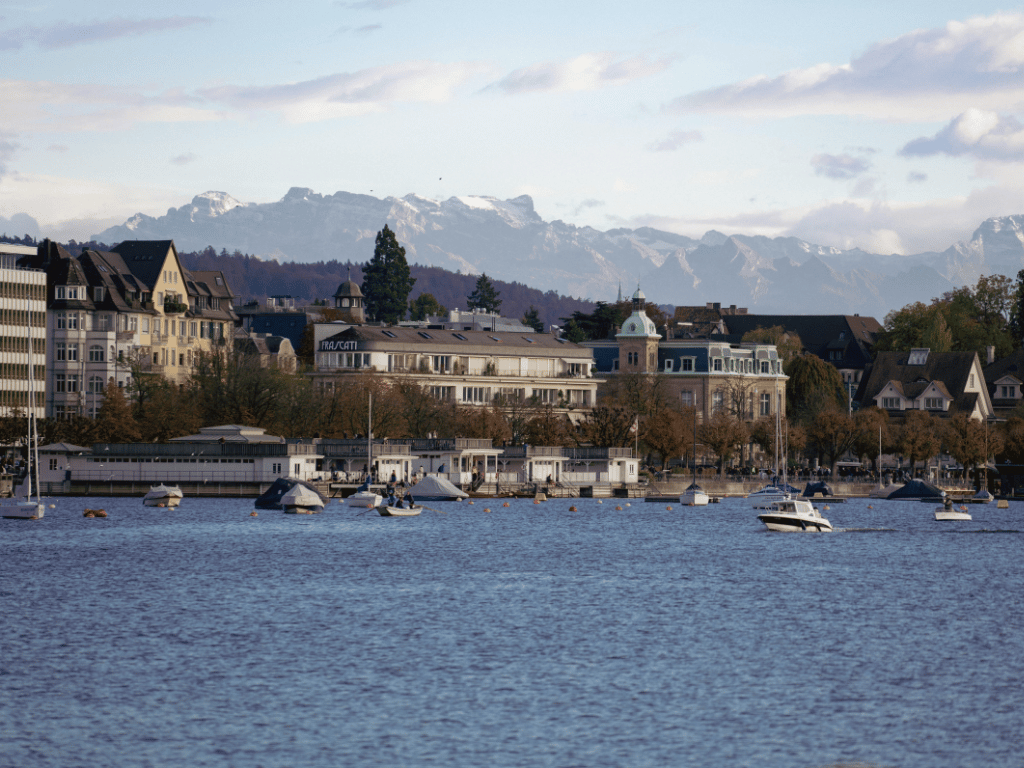
Where the shimmering current of the Limmat River meets tranquil Lake Zurich, boats and swans rest gently upon a glassy reflection of the Swiss Alps, as blue and white trams glide among the Baroque architecture decorating its banks. More commonly known as the fast-moving financial center of Europe, Zurich hides a uniquely alluring blend of medieval history, contemporary art and fine gastronomy, within its narrow cobblestone lanes and colorful guild houses, waiting to be uncovered by the curious traveler.
Marc Chagall in Zurich
With a church tower whose color echoes the hues of the Limmat River itself, the Fraumunster Church punctuates the skyline of the city, a treasure of Romanesque and Gothic architecture, proudly serving as a distinguished landmark of the city. Concealing breathtaking masterpieces at its heart, five vibrant stained glass windows designed by artist Marc Chagall adorn the church’s choir, almost inconspicuous when looking from the outside. The glorious windows are each a dynamic ode in orange, blue, green, and yellow, with Chagall celebrating classic Christian tales with a whimsical touch, allowing the stained glass panels to tell their stories through ever-changing visual effects created through the vibrant interaction of natural light and refraction.
Old Town Zurich
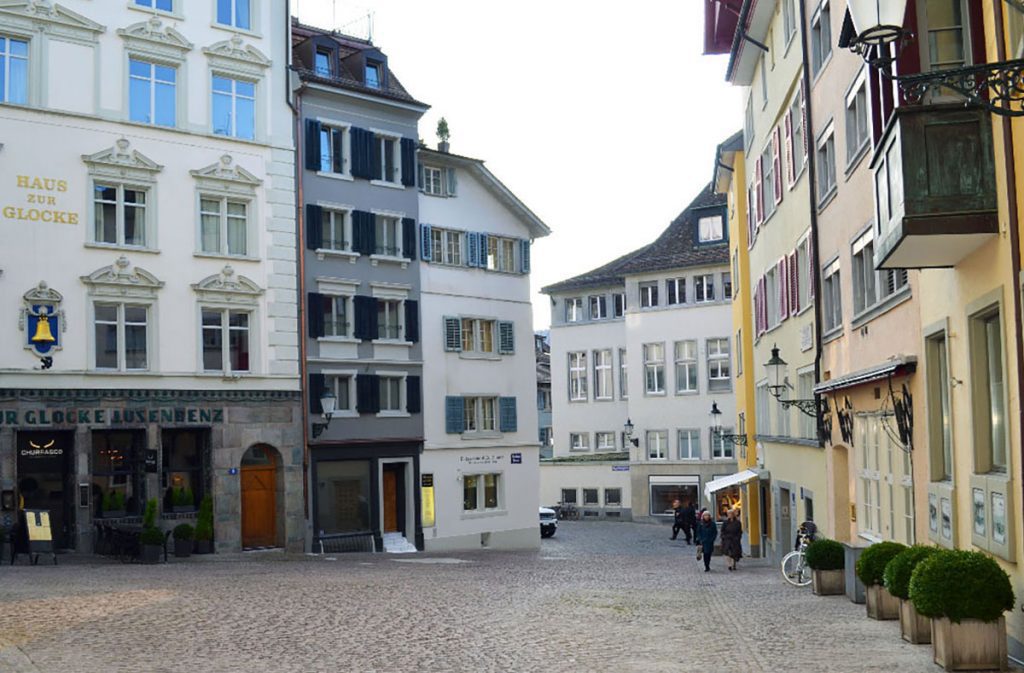
Traveling deeper into the city’s antique interior, the narrow medieval lane called Augustinergasse, offers perhaps the most exquisitely decorated facades to be admired in Zurich today, with its history as a onetime home for medieval artisans before becoming an architectural showcase for wealthy factory owners in the 17th century.
As one strolls past intricately carved wooden bay windows and the colorfully painted facades of historic shops, cafés and restaurants, one can easily imagine a charming scene of artisans busy in their workshops against an ever changing backdrop of brilliantly decorated houses each more splendid than the next, competing for the attentions of the keen eyed observer.
Modern Art in Zurich
Embellished with treasures of art and architecture spanning from the medieval to the early modern period, Zurich also proudly stands as the birthplace of Dadaism, and many other contemporary art movements. In 1916, at a small apricot-hued nightclub named Cabaret Voltaire, German artist Hugo Ball publicly read the Dada Manifesto, which marked the beginning of the avant-garde movement, rejecting what the artists believed to be a cultural and intellectual conformity of the period. Today, the nightclub continues to celebrate the spirit of Dadaism by hosting exhibitions, art events, and performances. At Löwenbräu-Areal, a red-brick industrial complex, vibrant expressions of contemporary art find their home in the former brewery. The art complex has attracted budding talents, art gallery owners, and museum curators to showcase their intriguing collections, as well as prominent architects Annette Gigon and Mike Guyer to add a futuristic sensibility to the space. A haven for imagination throughout the centuries, Zurich fosters its unparalleled creative scene by celebrating a historic legacy that also embraces brilliant expressions of modernity.
Why Zurich Belongs on a Thoughtful Itinerary
Zurich is not a city that needs to be over-scheduled. Its greatest appeal often comes from how naturally it can shape the beginning or end of a larger Swiss journey. For travelers arriving internationally, it offers a graceful landing point: polished, walkable, culturally rich, and close enough to the mountains, lakes, and wine regions to become part of something more expansive.
What makes Zurich especially valuable in an itinerary is its balance. It has the ease of a major European city, but the scale of a place that can still be experienced slowly. A traveler can spend the morning beside the lake, move through historic streets by afternoon, sit down to a beautifully composed dinner in the evening, and never feel rushed from one landmark to the next.
A Graceful First Landing
Zurich is one of the easiest places to begin a Switzerland itinerary because it gives travelers time to arrive well. After an international flight, there is something valuable about starting in a city that feels composed, walkable, and beautifully connected. Rather than rushing immediately into the mountains or countryside, Zurich allows the journey to open at a calmer pace.
A first day here can be intentionally simple: a refined hotel check-in, a walk along the water, a quiet meal, and enough time to adjust before the itinerary becomes more active. For travelers who care about ease as much as access, that kind of beginning can shape the entire trip.
A City With A Seat At The Table
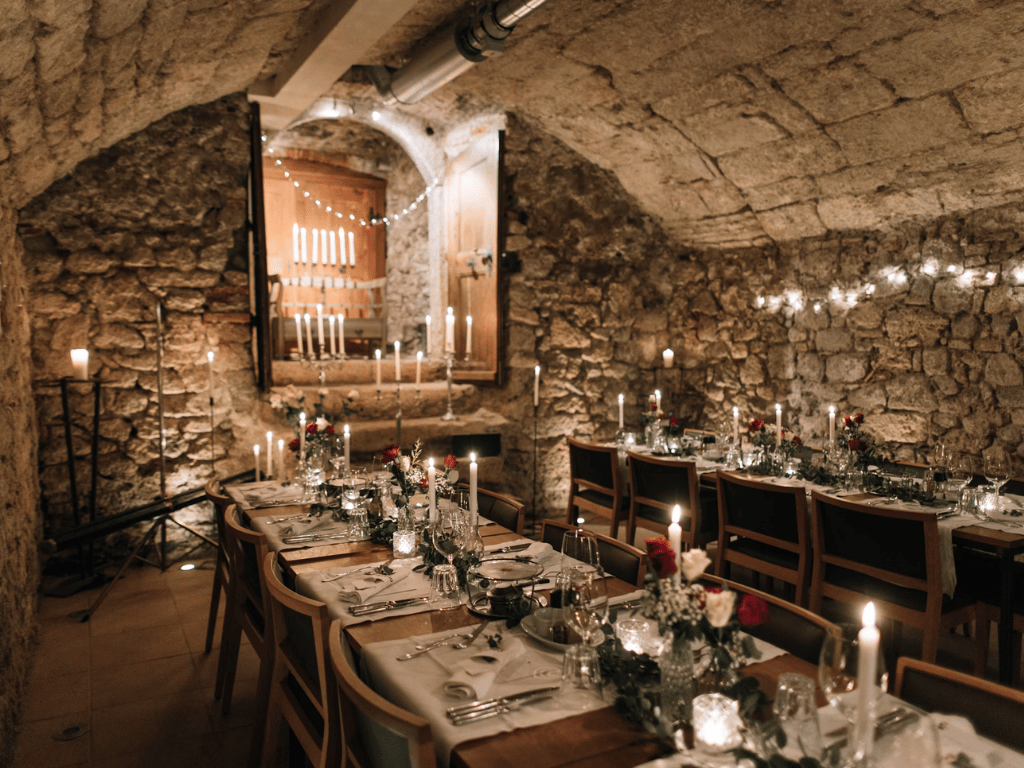
Zurich’s dining scene gives the city another reason to linger. Its restaurants reflect both Swiss tradition and a broader European sophistication, with everything from polished fine dining to intimate neighborhood tables, lakeside meals, and seasonal menus shaped by regional ingredients.
For travelers who build a trip around food, Zurich can offer a compelling contrast to alpine inns, vineyard lunches, and countryside dining elsewhere in Switzerland. It brings the culinary experience into a city setting, where a day of museums, shopping, or lakeside wandering can end with a dinner that feels precise, elegant, and deeply rooted in place.
The Urban Counterpoint To The Alps
Zurich’s value also comes from what it connects to. From here, travelers can continue toward alpine retreats, lakeside destinations, spa hotels, vineyard regions, or smaller historic towns with relative ease. It can be the elegant urban chapter before the drama of the Alps, or the polished final stop after slower days elsewhere in the country.
In that sense, Zurich does not have to compete with Switzerland’s most famous landscapes. It complements them. The city adds art, dining, architecture, and urban refinement to a journey that may otherwise be shaped by mountains, water, and countryside quiet.
Zurich Travel FAQs
Is Zurich Worth Visiting?
Yes, Zurich is worth visiting for travelers who appreciate art, architecture, refined dining, lakeside scenery, and an easy introduction to Switzerland. While many people know Zurich as a financial center, the city also offers historic neighborhoods, cultural landmarks, excellent restaurants, and a calm, polished pace that works beautifully within a larger Swiss itinerary.
How Many Days Should You Spend In Zurich?
Most travelers should spend two or three days in Zurich, especially when the city is part of a broader Switzerland itinerary. That gives enough time for the Old Town, Lake Zurich, museums, dining, and unhurried wandering without making the visit feel rushed.
What Kind Of Traveler Will Enjoy Zurich?
Zurich is best suited to travelers who value atmosphere, culture, ease, and thoughtful pacing. It is especially appealing for those who enjoy elegant cities, walkable historic centers, refined hotels, seasonal dining, and destinations that reveal themselves quietly rather than all at once.